The Fundamentals of Men's Tailoring
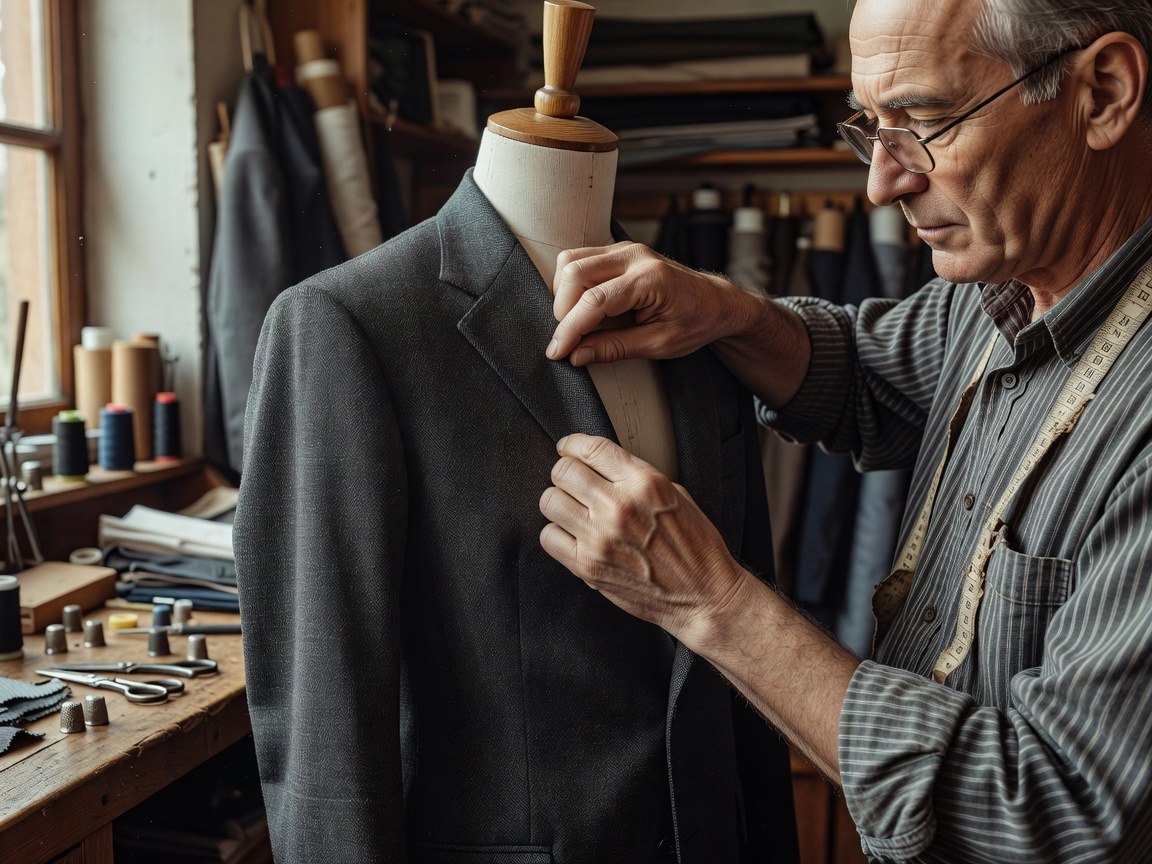
Navigating the realm of men’s tailoring requires a discerning eye and a foundational understanding of garment construction. Whether you are acquiring a suit for daily professional wear or a tuxedo for occasional galas, the principles of fabric selection, construction methods, and fit remain constant. In this guide, Swayspalhous breaks down the critical elements that differentiate an average suit from an exceptional one.
Construction: Fused vs. Canvas
The most crucial aspect of a tailored jacket is its internal structure, known as the interlining. This hidden layer dictates how the jacket drapes over the body and how it will age over time. Broadly, jackets fall into three categories of construction:
- Fused Construction: The most common method for off-the-rack suits. A synthetic interlining is glued to the wool shell. Pros: Highly cost-effective and lightweight. Cons: Over time, the glue can break down, leading to "bubbling" on the chest or lapels. It lacks the natural drape and breathability of a canvassed suit.
- Half-Canvas: A compromise between cost and quality. A natural horsehair or cotton canvas runs through the chest and lapel, while the lower portion is fused. Pros: Provides excellent drape on the chest where it matters most, prevents lapel bubbling, and costs less than full canvas. Cons: Still utilizes adhesive on the lower half, restricting breathability slightly.
- Full-Canvas: The hallmark of premium tailoring. The canvas runs from the shoulder down to the hem. The outer fabric is stitched, not glued, to the canvas. Pros: The jacket conforms to the wearer's body over time, providing an unparalleled fit. It offers maximum durability and breathability. Cons: It requires highly skilled labor, making it significantly more expensive.
Fabric Selection and Super Numbers
When selecting wool, you will often encounter a "Super" number (e.g., Super 110s, Super 150s). This number refers to the fineness of the individual wool fibers before they are spun into yarn. While a higher number indicates a finer, softer fabric, it does not necessarily mean it is better for all applications.
Fabrics in the Super 100s to 120s range are robust, wrinkle-resistant, and ideal for daily wear. Once you move into the Super 150s and above, the fabric becomes incredibly luxurious but equally delicate. These high-grade wools are prone to wrinkling and abrasion, making them better suited for occasional wear rather than the daily commute.
The Nuances of Fit
Even a full-canvas, bespoke suit will look poor if the fit is incorrect. The silhouette should complement your natural body shape rather than working against it.
| Fit Area | Criteria for a Proper Fit |
|---|---|
| Shoulders | The seam should sit exactly at the edge of your natural shoulder. Divots or rumpling indicate a poor fit. |
| Chest | The lapels should lie flat against the chest without bowing outward when the jacket is buttoned. |
| Length | The jacket should cover the curvature of the seat, and you should be able to curl your fingers under the hem. |
| Sleeves | Should expose approximately 1/4 to 1/2 inch of shirt cuff. |
Off-The-Rack vs. Made-to-Measure
For most men, a high-quality off-the-rack (OTR) suit, adjusted by a competent tailor, is sufficient. OTR suits rely on standardized blocks, meaning you must find the brand whose block most closely matches your body type. Made-to-measure (MTM), on the other hand, alters a standard block based on your specific measurements before the fabric is cut. This accommodates asymmetrical shoulders or distinct chest-to-waist ratios, offering a superior fit without the extensive fittings and prohibitive cost of pure bespoke tailoring.
Understanding these fundamentals transforms the process of buying a suit from an intimidating chore into a strategic investment, ensuring longevity, comfort, and undeniable style.